THE VISION
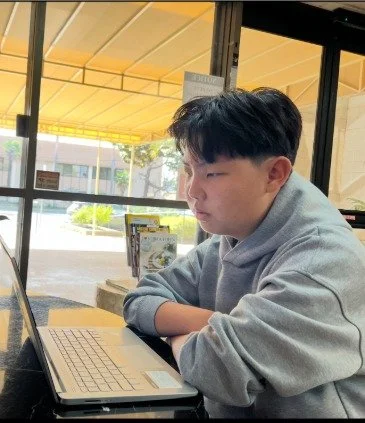
The project started with a simple question: “How can I further explore my heritage to dig deeper into my identity while also uplifting the lives and stories of others?” As a Korean-American, who I am was always engrained into the way I lived, including the foods I ate, the people I grew up around, and my priorities in life. As time passed, a budding curiosity naturally grew within me, a desire to learn more about others in my culture in order to understand exactly the scope and scale of my own community and my place in all of that noise.
The uncertainty surrounding my Korean-American identity largely took place as a result of my two clashing identities, where, although my Korean side revolved largely around my desire for both academic and financial success, the more modern, American side of myself encouraged me to fully explore my passions outside of school, including things like acting, singing, etc.,
I decided to take on the Korean American Interview Project as a personal quest for answers regarding my own identity and my place within the overall Korean American community, with the project simultaneously doubling as a way to preserve precious Korean-American stories in order to promote diversity and care for Asian-American/ethnic history within the U.S.
Project Timeline:
AUG. → SEPT.: began the process of brainstorming how to effectively interview people, who to target as interviewees, what possible equipment may be needed, what legal documents to provide, etc.,
OCT. → NOV.: began making a list of questions to ask during the interviews as well as providing their accurate Korean translations
NOV.: searched for suitable places to interview people after deciding on interviewing elderly Korean-Americans, specifically looked for local nursing homes and would drive for several hours across a variety of days
found a local nursing home and began the interview process that same day
finished an initial round of interviews (around 10 people)
DEC. → JAN.: tried looking for more local nursing homes and eventually contacted the previous location and was able to secure another round of interviews there
finished a second round of interviews (around 13 more people)
JAN. → MAY.: began compiling all interviews and working out technical issues regarding retrieving videos across multiple devices and storage systems
renamed all interviews and prepared for the editing phase
JUN. → JUL.: started and finished the editing phase, preparing the videos for a digital upload after having to figure out an entirely new editing software and using new features for the first time
THE PROCESS
THE RESULT
Ok-Im
Ok-Im explains that she married an American and simply chose to stay in the U.S. after coming to the U.S. more than 60 years ago. Ok-Im recounts how she got into sewing as official work in the U.S. without studying or going to school in the first place, showing how success merely comes from how you realize you can live your own life.
John S. Kim
KIm explains how he initially served in the Korean army, but upon not receiving a promotion and retiring, he decided to immigrate to the U.S., seeing that the improved education for his children would be a plus. Kim sums up in a message to young Korean Americans that everybody should work hard, a sentiment shared in his story setting up a business in the U.S. even after already retiring in Korea.
Lee In-Jin
Lee recalls arriving in the U.S. during the 80s, first landing in Hawaii, before trying to realize her dream to provide better education for her children. Lee reveals that she and her husband performed hard physical labor to earn money, stating that they were young and therefore had healthy, able bodies. In-Jin teaches that the U.S., in her opinion, is much better than Korea, likely stemming from the opportunities that she sought to and was able to provide for her children.
Susan Kim
Kim explains that she was inspired to come to the U.S. thanks to her brother’s established time there. Kim reveals that she ran a print shop with her brother for work in the U.S., and reinforces the idea of hard work in a message to young Korean Americans.
Choi Myung-Gim
Choi explains that she has lived in the U.S. for 36 years, then revealing that she immigrated to the U.S. to provide a better education for her child, starting in Virginia but soon moving to L.A. Choi explains that her child loved it in the U.S., largely in part due to the friendly atmosphere and energy of American children, expressing her own fondness for American culture as well.
Chung Myung-Ja
83 year old, English-speaking Chung Myung-Ja starts her story dedicating her immigration and hard work in the U.S. to wanting to afford a high-quality education for her three daughters in the hopes of securing comfortable lives as adults later on. Chung notes being shocked at the difference in food upon her arrival in the U.S. compared to Korea, something that she can expertly speak on due to one of her first jobs as an employee in a restaurant. She details also working at a dry cleaners and later opening up her own coffee shop, contributing to her desire to support herself and her children.